Lee Kai-Fu suggests artificial intelligence will accelerate drug discovery

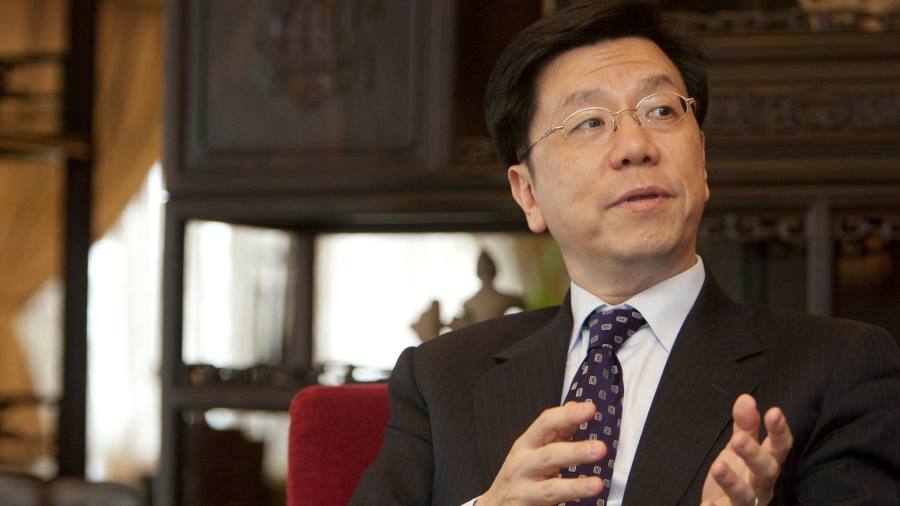
Table of Contents
This post is an on-website version of our #techFT e-newsletter and is generally accessible only with a Premium subscription. Are you presently a Common subscriber? Click in this article to switch your membership to Top quality. Not still a subscriber? You can take out a Premium subscription in this article
The pandemic speedy-tracked technological deployment in general public wellbeing and medication. Anything from contact-tracing apps to companies giving distant doctor appointments. But nowhere has the part of technological innovation — particularly artificial intelligence — been far more hotly debated than in the field of drug discovery.
Advocates stage to the pandemic as evidence of its price in healthcare even as critics dismiss its use in drug discovery as “hype”, studies Hannah Kuchler.
In January 2020, researchers at the pharmaceutical business BenevolentAI made use of synthetic intelligence algorithms to trawl by 50mn medical journals to look for for accredited medication that could be repurposed to address the disease.
The scientists and the algorithm narrowed down the search to baricitinib, applied to address rheumatoid arthritis — all in a subject of 4 times. The Eli Lilly drug tackled both the virus and the body’s inflammatory reaction. The party marked the initial time AI had uncovered a drug, now in common use, that could be redeployed.
TechFT sat down with Lee Kai-Fu, an investor and creator of AI 2041: Ten Visions for Our Upcoming, to communicate about the technology’s function in drug discovery.
EO: What position does AI have in drug discovery?
LKF: AI can enable pace up drug discovery in a few phases of drug progress. The initial section utilizes AI to slender down the number of drug candidates. Alternatively of a scientist filtering a drug from 10,000 candidates down, the AI will do that centered on inputs fed in by the scientist. This system brings together AI with human skills to pick the candidates with the maximum chance of good results in clinical trials.
The second period uses AI in the course of the experimentation period, the place robots can automate considerably of the lab function. Robots replicate straightforward and regime manual procedures this sort of as opening check tubes, mixing liquids, putting in chemical brokers, growing the society, observing the response and manufacturing the consequence. These are regime and replicable treatments for robots, therefore accelerating the 2nd phase of scientific drug growth.
The 3rd period is to use AI to accelerate procedures in the medical demo stage, for example, helping pharmaceutical corporations to match people with the clinical trial. The profit of these three combinations is to convey down the expense of drug discovery, lowering the bar for pharmaceutical organizations to acquire cures for scarce health conditions that had been not cost-effective to target.
EO: There is a truthful total of scepticism in the healthcare establishment about the position of AI in medication. What will convince them of the upcoming you are charting out?
LKF: I’m quite conscious of a cognisant mismatch between the professional medical and AI community. There are a lot of AI persons with starry-eyed dreams that they could alter the globe if only their software package was adopted all over the place — who assume it’s not occurring just simply because of a various way of imagining [in the medical profession]. But that challenge will not transpire in drug discovery simply because the pursuits are aligned. We’re not proposing a new technique of drug discovery. In each individual of these a few phases, almost everything will be performed to the precision and satisfaction of humans, within a framework that presently exists.
EO: What are the dangers of deploying AI in drug discovery?
LKF: There is a probability the exact same applications utilized to learn prescription drugs that cure sickness could be applied to invent poisons to harm folks correctly. One particular probable mitigation is not making this open-resource to stop it from slipping into the erroneous fingers.
Dig deeper into this subject with Hannah Kuchler’s Huge Examine on AI’s ambitions of turbocharging the hunt for new medication, which some critics dismiss as a pipe aspiration. Anjana Ahuja’s short article warning about the hazards of AI that could be applied to build biological weapons supplies a handy cautionary observe to pharma and AI companies.
The Online of (4) Things
1. South Korean fintech challenger targets south-east Asia
Viva Republica, one of South Korea’s most beneficial fintech start-ups, is searching for to elevate up to $1bn from worldwide investors. Toss presents money transfer and debit card services in South Korea and Vietnam. It is now pushing into new south-east Asian marketplaces, where it will go head to head with Singapore’s Grab and Indonesia’s GoTo, which analysts say have the incumbent benefit, obtaining built a robust fintech ecosystem on the back again of sturdy ride-hailing info.
2. Amazon faces vital unionisation vote
Employees of an Amazon Alabama warehouse have been voting on whether they want to unionise, a phase that could mark the company’s very first unionisation in the nation. Amazon, the second-most important employer in the US, just after Walmart, has an unbeaten history in squashing unionisation attempts in the US. Dave Lee stories that a “yes” vote would spell difficulties for Amazon, coming just as it is becoming squeezed by growing labour costs and supply chain shortages. Ballots are thanks to be counted subsequent 7 days.
3. Massive Tech’s expanding land get
Lex dug into the once-a-year reviews of significant tech companies to chart the substantial true estate investments built immediately after accumulating huge income piles. In the final established of once-a-year stories, Amazon listed its world properties as shut to 35mn sq ft, plus another 570mn sq ft in leased area. It values its land and properties at $81bn, up from $32bn at the conclude of 2018. Meta tots up its land and creating worth at $24bn in 2021, from $8bn in 2018.
4. EU established to unveil landmark law on tech giants
The EU is poised to unveil a regulation developed to rein in the marketplace electrical power of Major Tech as early as Thursday. The Digital Markets Act will influence web businesses with at minimum 45,000 active buyers and introduce new controls such as tighter restrictions on the way firms cope with private knowledge.
Tech equipment
Dyson’s new and improved Airwrap multi-styler hair instrument will strike British isles retail outlet cabinets up coming thirty day period — an update from the authentic sellout 2018 design. The Airwrap can dry, curl, straighten and shape hair — with no the very same major warmth destruction induced by regular curling irons or hair straighteners. The Airwrap employs airstreams to condition hair strands, and the new design has attachments that make it more quickly and a lot easier to beautify one’s barnet. The comprehensive Dyson Airwrap kit will established you back again £479.99.